


I learned computing and programming on products built by companies that no longer exist. My first was on a Nova which was a small computer built by Data General. My second was on an IMSAI 8080. My third and the one that taught me the most was a PDP 11/03. It was the leader in scientific computing manufactured by Digital Equipment Corporation (DEC). DEC was the great rival of IBM and its users, like me were a rebellious sort. We liked to give our computers names, and the variants of pun names on the DEC VAX were legion. All of those industry leaders are dead and buried except for in Boomer nostalgia. One of my favorite dudes on X, Dave Plummer, has been restoring them in his garage.
These days, I sometimes mock the Doomer contingent of AI safety activists because I tend to associate them with Effective Altruism, and the intelligent couple from the film Idiocracy who are incapable of conceiving a child. In my imagination they are sensitive, brilliant, hand-wringing people who believe with great earnestness that the world’s population will be living inside the game-theoretic world they are creating. When they talk about subjects like alignment and the bugs in their AI platforms, they tend to remind me of Ralph Nader, who famously wrote Unsafe at Any Speed. Nader was also a nuclear energy doomer as well.
If I have a pet peeve set of any significant size, certainly the one at the top of the list is that America has become practically incapable of overcoming its fear of nuclear energy. As a young man and now in my maturity, I have always appreciated sound engineering and scientific discipline. I remain amazed by the inventions of great Americans like Kettering as well as the philosophical rigor of Popper, and I cannot concede that those who ignore or argue against their ideas of progress should ever triumph in the long run. But every generation has a dainty contingent who literally tremble with fear at the prospect that they might accidentally bring children into this world. These are the people who trade liberty for security, who not only fear fear itself but recruit others into their fearful delusions.
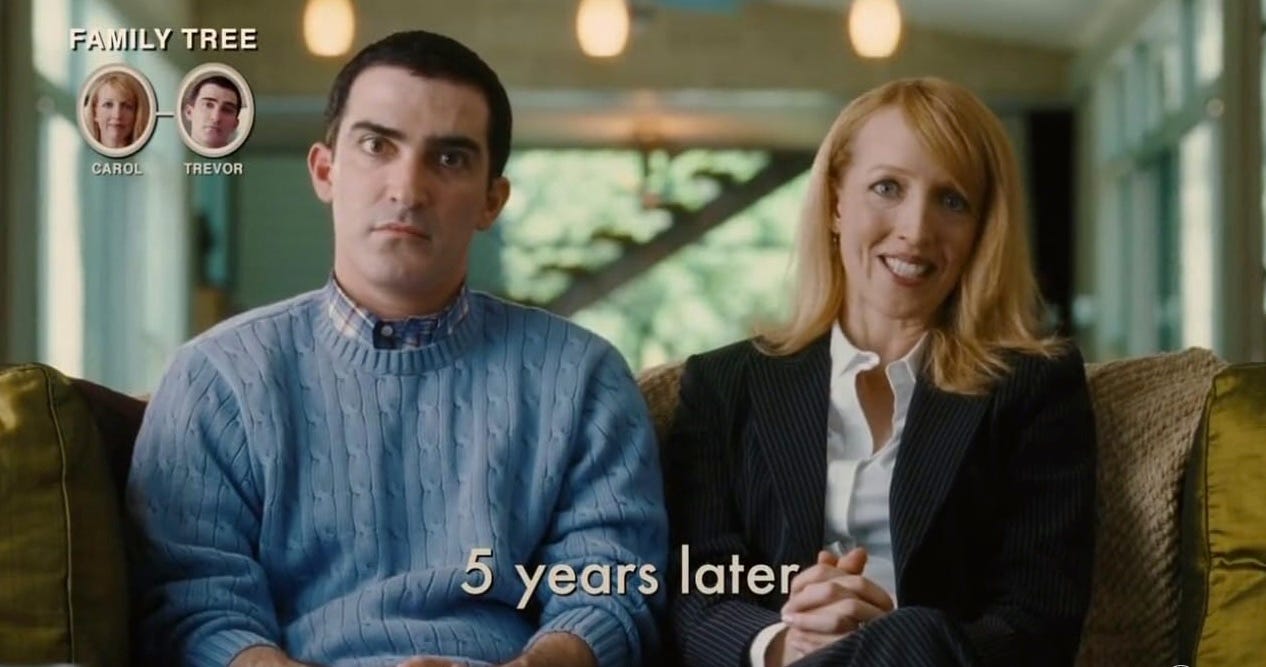
All Cowards Are Mortal
All heroes are mortal as well. The test of the meaning of our fragility lies in our ability to classify and calculate risk with some skill. In the context of a populist politics, where loyalty is prized over discernment, we are likely to confuse heroes and cowards. There are areas of doubt and risk where it is easy to make reasonable discernment and there are areas where most experts are all easily dead wrong. Where are Xerox computers today? Where indeed is DEC? Where are 3DO, General Magic and Zuck’s Metaverse? Poof I say. Where are America’s rare earth metals? Well they’re in the ground because the cowards won and conceded the risk-taking to the Chinese.
When I bring questions to mind about the reasonableness of regulating AI, I am struck by the pessimism of most Americans on the one hand and the venal envy of particularly loud Americans on the other. I’m alluding to the demonstrated hatred of Elon Musk, who made the old dreams of environmentalists come true with his huge fleet of electric vehicles, and of Musk’s own calculations that the only freedoms he can really take advantage of are in orbit or on other planets. Only outside of any earthbound jurisdiction can he achieve.
Sadly then, constraints on AI are not in the stars but in ourselves. In American fears of existential risks posed by what are essentially software bugs, there are conspiracies arising. Outside of the failures of courage and discernment are the failures of industry. I use the term in the context of industriousness.
Power Steering
Consider the abstract concept of the ‘castle doctrine’. All of mankind, especially us WEIRD ones, consider it a matter of right to be safe in our possessions and our persons. We are not to be coerced into sacrifice for any greater purpose than our own God given rights. This idea is in tension with an actual sense of entitlement to comfort along that same spectrum of individual sovereignty. So it’s not enough to suffer the inconveniences of the German Volkswagen. Manual shift. Manual windows. Small four cylinder engine. Ordinary hubcaps. Manual brakes. No air conditioning.
I can resist the sentimental urge to say ‘That America no longer exists’, because it wasn’t America, it was principled Americans themselves who made a smart economic choice for practicality over luxury. One who feels entitled to luxury points in one direction and one determined to value thrift in another. I see these in dimensions of virtue and intelligent capability. The man in the VW is not trying to be popular. He isn’t aiming for loyalty with the elite Cadillac crowd.
This brings us to the question of our own economic constraints. Are we capable of resisting the luxury, ease and comfort of having AI serve us in our castles? Remember that all of those data centers and construction thereof is driven by the assumption that AI will make all of our lives easier and will take us into new realms of market heaven. I coin a new term for these prosumers who are banking on monetizing the new class of clean-handed work - The Bright Collar workers. If I were starting off in college today I’d want to abstract myself up one layer from the current geeks and nerds who labor over manual coding tasks. Why do such manual labor when we can have Power? There’s no irony in the Microsoft branding of their new data products as the Power platform.
Like the migration from manual transmissions and three pedals to two pedals and automatic transmissions to the golfcart style of driving electrics all the way to dual clutch paddle shifts in the sportiest sports cars, there is a cost in complexity and a corresponding loss in physical dexterity of the drivers. I would always beware of pawning off responsibility. Use it or lose it. But my bet also says that human nature is consistent in that the bright collar workers will look down on the white collar workers, and middle class insecurity will remain.
Are there any professionals you know (not in logistics) who don’t denigrate the USPS and would never consider that enterprise particularly intelligent? I have email, texting, Zoom, Instagram, Facebook, X, Bluesky, Slack, Signal, Discord, Teams as well as three different phone numbers. It’s a miracle that I have any time for Substack, WSJ and the Times Crossword. Perhaps AI will handle and throttle all of those channels down to a simple few, or maybe I’ll just retire to spend more time with my family.
Big AI
The advantages of artificial intelligence as we know it and as we hope it to be are significant. So was Bitcoin. So were IBM and Microsoft, neither one of whom dominate the cloud server operating system market. When the hype and doom die down, we will be left with odds and ends of a rabble of low-end, budget, mainstream, upscale and luxury choices after the inevitable shakeout. They will be as pedestrian and ubiquitous as frequent flyer miles, car stereos and icemakers. Some of us will whine and complain about cheap imports while driving our big Buick Frontier models. Some of us will head over to Bonneville Salt Flats with our own hot rodded inventions. We’ll all watch the tragedies on the news with the same rapt fascination we give to the fate of the Kurds and the South Sudanese. Will AI give us a top ten tragedy list? Hmm. Maybe. Then again, what is the Dark Web? And how many murderers are in American prisons. How many children go missing? We seem to handle those kinds of things as a nation.
AI will be a slightly different thing to each of us but it will be constrained my our imaginations.
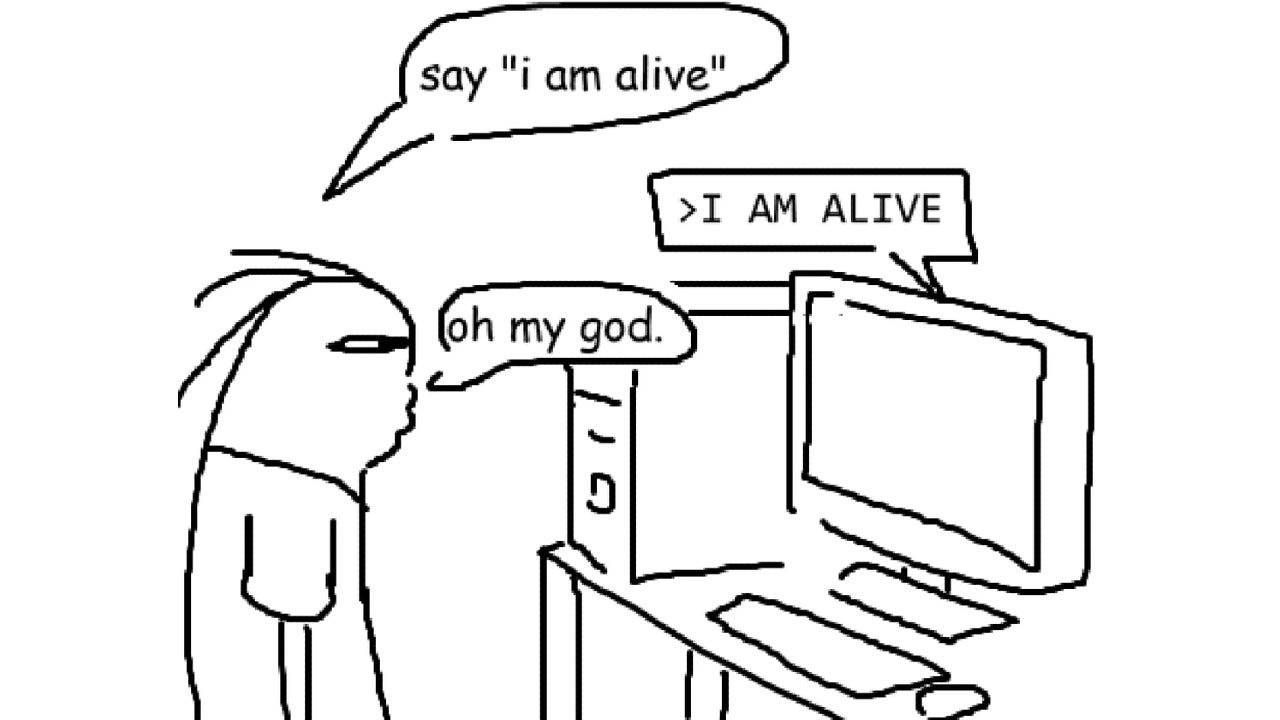
Some of us will use it as research assistants on scholarly subjects. Some of us will build games. Some of us will hack institutions we disrespect. Some of us will see how far we can get it to hack itself. It’s all wide open. Except it’s not. It’s all going to be done by us people, each of us following our own motivations, and the markets will follow along. There won’t be infinite chips. There won’t be infinite electricity. There won’t be infinite anything; even our confusion and fear will have limits, just like COVID and the war in Afghanistan did.
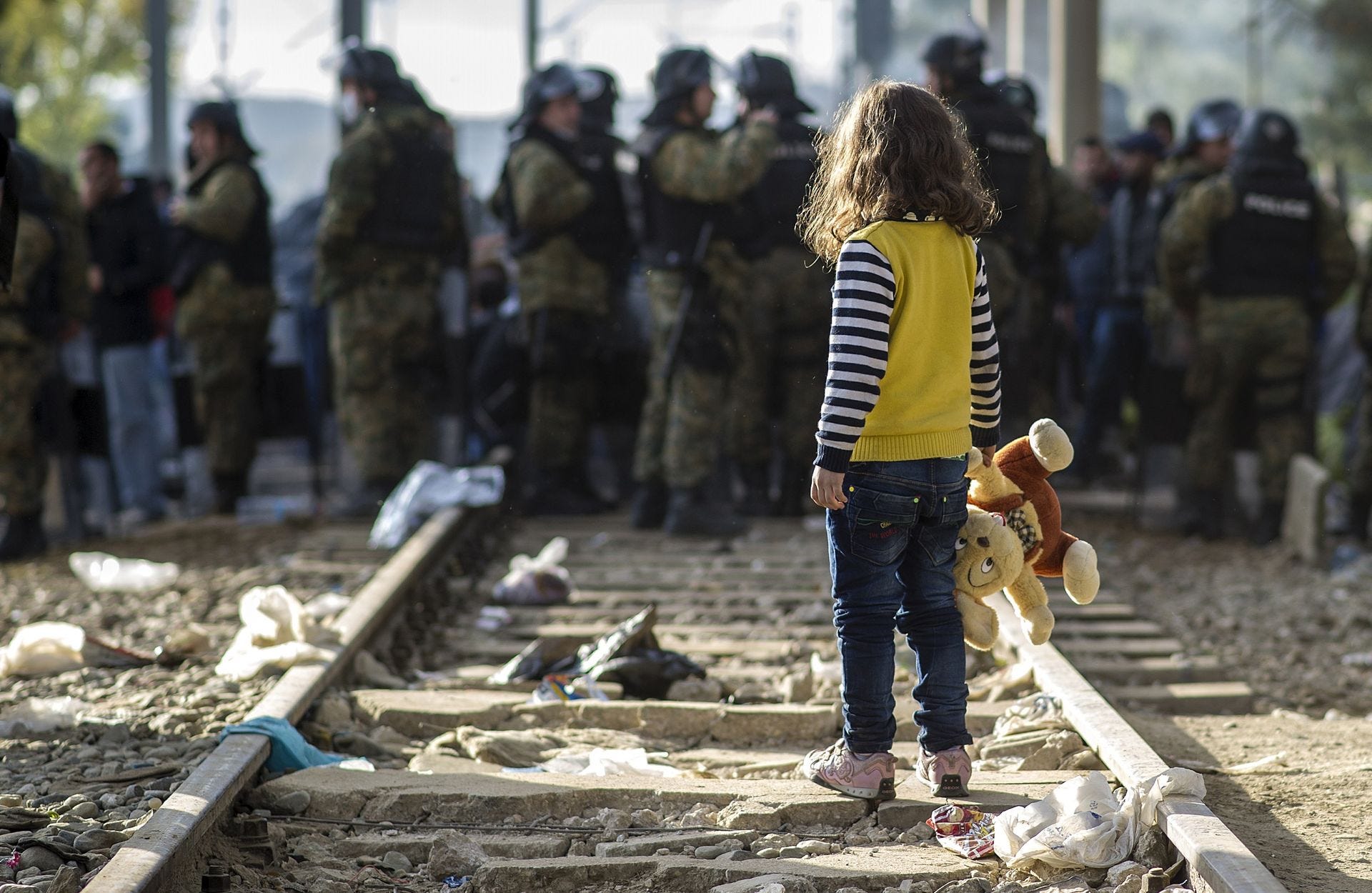
Speaking of war. Despite all of the billions of smartphone cameras we now have, I do miss photojournalism.
My Stoic Interpretation
If you haven’t guessed from my prior quotable, ‘War is the way of mankind. Our duty is to survive it.’ I believe that there will be conflict and competition in the AI marketplace and the horizon is further away that we think. Doom is not right around the corner. Millions of people have to die for that to be even thinkable. Think about how long Tibetans and Nepalese have been living with avalanches from the Himalayas.
There is no economic low hanging fruit. You are a peasant. Get your value and your satisfaction from the truth of your family, of your children, of your neighbors. Don’t sweat the the duplicity of deepfakes and the slop of AI hallucination. Only those products who survive these security and integrity challenges will survive in the market. So long as we have liberty and torts, the problems will be worked around. Maybe stop thinking globally. It hasn’t been how we survived for thousands of years.
Here's the link that I just put up on Vimeo "HAL_terminated.mp4", online now at this URL...
https://vimeo.com/1228478898
...the brilliant nine-minute extract from Kubrick's "2001: a space odyssey" (released in 1968) of the re-entry of Dave into the Jupiter-bound spacecraft immediately after HAL 9000 has murdered the rest of the mission crew. And Dave, in a cold rage, ejects HAL's memory banks one by one, with HAL begging and pleading and pathetically mewling to desist.